
Posted by OUTDOORICA on 9th Oct 2026
Snow Blower Maintenance in Minnesota: Checklist & Service
Shopping and source links open in a new tab or window. Checklist shortcuts stay in this article.
What Is National Snow Blower Maintenance Week?
October 15–21 is National Snow Blower Maintenance Week. Toro and National Day Calendar established the observance in 2023 to encourage pre-season equipment care. Use it as a reminder to inspect what you own, fix wear, and arrange service before the first demanding snowfall.
Toro's 2026 campaign highlights often-overlooked skid shoes, scraper bars, and single-stage rubber paddles. That is a useful starting point whether you own a Toro, Ariens, Cub Cadet, or another brand: starting the engine is only part of winter preparation.
This independent OUTDOORICA guide adds Minnesota-focused buying and service help, plus a separate hydraulic skid steer checklist. A gas walk-behind and a hydraulic attachment need different maintenance—not the same tune-up on a larger scale.
Find your model and serial numbers first. The matching equipment and engine manuals control fluid specifications, clearances, parts, and service intervals. Cub Cadet’s operator-manual lookup is a useful starting point.
Campaign references: National Day Calendar dates and history ; Toro’s 2026 maintenance announcement .
Before You Touch the Machine
Shut down and isolate power. Disengage the drive and auger, stop the engine, remove the key if fitted, and wait for all movement to stop. Follow the manual to disconnect and secure the spark-plug lead, remove the battery, or unplug power before inspection or repair.
Never put your hands in an auger or discharge chute, even with the engine off. Follow the shutdown procedure and use the specified cleanout tool. A stopped machine can still contain stored energy.
Run engines outdoors, not in a garage—even with the door open. Let the engine cool before refueling. For skid steer work, lower the attachment to stable ground and follow the carrier’s shutdown and hydraulic-pressure-release procedures. Never rely on hydraulics alone to support raised equipment.
Source guidance: CPSC snow blower safety ; hydraulic maintenance safety .
How to Maintain a Traditional Walk-Behind Snow Blower
These checks focus on gas-powered machines. For battery or corded models, skip the fuel, oil, and spark-plug tasks and follow the manufacturer’s electrical and battery instructions.
1. Inspect Before You Try to Start It
Look for loose hardware, damaged guards, frayed starter cords, fuel leaks, and damaged cables. Clear accessible debris around the engine and exhaust with the machine shut down and cool. Check that the cleanout tool is present. A missing guard or damaged control is a repair item, not something to work around.
2. Start with Fresh, Correct Fuel
Check what has been sitting in the tank. Replace stale or contaminated fuel using the manual’s procedure rather than simply topping it off. Use the specified gasoline; Cub Cadet accepts E10 but warns against E15. Do not use higher-ethanol blends such as E85 in equipment not designed for them.
Add a suitable stabilizer to fresh fuel according to its label. It is a storage aid, not a repair for an already clogged carburetor. Four-cycle engines use separate engine oil; older two-cycle machines need their specified fuel-and-oil mix.
Source guidance: Cub Cadet fuel selection ; Cub Cadet pre-season preparation .
3. Check Engine Oil and the Service Schedule
On a four-cycle engine, check oil on level ground using the correct dipstick procedure. Use the engine’s specified oil grade and capacity; do not assume the whole bottle belongs in the crankcase.
A useful example: Cub Cadet’s general snow blower chart lists an initial oil change after the first five operating hours and subsequent changes each season or at 50 hours. Follow the earlier applicable interval and your exact engine manual. The initial change is a new-engine requirement, not a reason to restart the break-in schedule every winter.
Source guidance: Cub Cadet maintenance chart .
4. Check the Spark Plug, Belts, and Controls
Inspect the spark plug and replace it when its condition or service schedule calls for it, using the specified plug and gap. Inspect belts for damage or significant wear and verify that control cables move correctly. Internal drive repairs and adjustments belong with someone familiar with that model.
Lubricate only the points and components identified in the manual. More lubricant is not automatically better, and belts or friction-drive contact surfaces must not be treated as grease points.
5. Inspect Skid Shoes, Scraper Bars, and Paddles
Your snow blower starts—but are the wear parts ready? Inspect the components that meet the surface before the housing itself begins taking the wear.
Two-stage and three-stage machines: inspect fitted skid shoes and the scraper or shave plate for wear, damage, and uneven contact. Check tire pressure or track condition as directed. Use the model's adjustment instructions rather than a universal clearance measurement.
Single-stage machines: check rubber paddles and scraper bars against the manufacturer's wear limits or indicators. Do not assume a ground-contact paddle machine is suitable for gravel.
Gravel driveway? Choose a suitable machine and follow its skid-shoe settings to avoid collecting loose stones. Correct setup depends on the machine and surface.
Source guidance: Cub Cadet surface and skid-shoe guidance ; Toro’s wear-part inspection guidance .
6. Use the Correct Shear Pins—Not a Convenient Bolt
On models that use them, shear pins are designed to break under a jam to help protect the drive components. Inspect them and keep the correct replacements with your winter supplies. Cub Cadet specifically warns against replacing them with ordinary bolts.
After a pin breaks, shut down and isolate the machine before checking for an obstruction. Repeated breakage calls for investigation, not stronger hardware.
Source guidance: Cub Cadet shear-pin guidance .
7. Test It Outdoors Before You Need It
Reinstall guards and restore power only after inspection is complete. Follow the starting procedure and test the drive, auger engagement, chute controls, and lights from the normal operating position, with people and pets clear. Confirm that controls disengage as the manual requires.
If it leaks, vibrates abnormally, smokes unexpectedly, or will not disengage correctly, stop using it and arrange service. Finding that problem in October is far better than discovering it at the end of a snow-filled driveway.
Source guidance: Cub Cadet winter preparation ; control and maintenance checks .
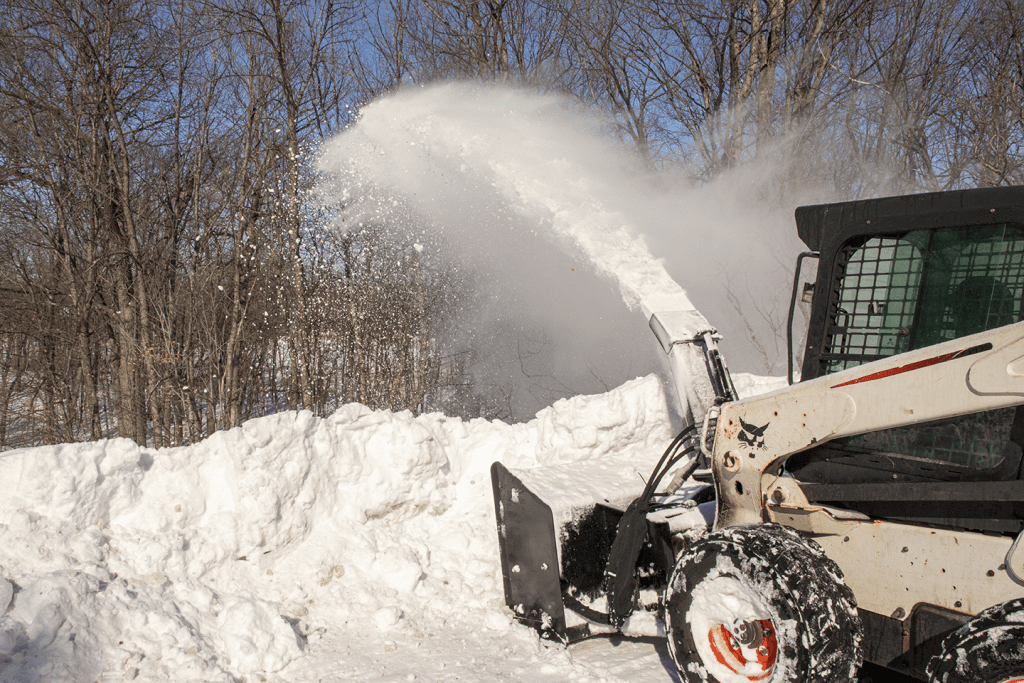
Skid Steer Snow Blower Maintenance: Check the Whole System
A blower attachment can be ready while the carrier is not. Review both manuals. The checks below are general hydraulic-attachment inspection guidance, not a substitute for Prime’s model-specific lubrication, torque, or repair instructions.
1. Match Hydraulic Flow, Controls, and the Carrier
Confirm the attachment’s required flow in gallons per minute, pressure limits, mounting compatibility, weight, and control connections. Verify any required return or case-drain plumbing for the particular model. A matching mounting plate alone does not establish compatibility.
Prime’s published snow blower information lists a 15–26 GPM standard-flow range and a machine-specific wiring harness. Verify the configuration of the unit you own or intend to buy. Do not select high-flow mode simply because the carrier has it.
2. Inspect the Mount, Hoses, and Couplers
With the attachment grounded and power isolated, inspect the mount and locks. Confirm full engagement as directed by the carrier manual.
Inspect hoses and fittings for damage. Clean couplers before connecting, cap disconnected ports, and keep hoses clear of pinch points.
Source guidance: manufacturer guidance on hydraulic attachment care .
Hydraulic leak? Stop—do not feel for it. Never use your hand to locate a pressurized leak or loosen a connection to improvise pressure relief. Shut down, release stored pressure as directed, and have damaged components repaired properly.
Fluid injected through the skin is a medical emergency, even when the puncture looks small. Seek immediate professional medical care.
Source guidance: safe hydraulic maintenance ; HSE hydraulic injection warning .
3. Check the Cutting Edge, Skid Shoes, Auger, and Fan
Inspect visible wear surfaces, fasteners, guards, and the auger and fan for damage with all power isolated. Replace worn edges or shoes according to the manual; do not keep wearing into the housing. Have cracks, bent rotating components, or rubbing investigated before operation.
Prime is not a walk-behind with bigger tires. Its published blower design uses direct-drive hydraulic motors and internal relief valves rather than the shear-pin arrangement described above. Do not apply a walk-behind shear-pin fix or alter relief settings to force it through a jam.
Source guidance: Prime snow blower design and specifications .
4. Follow the Actual Lubrication Plan
Use the specified grease at the designated service points and intervals. Do not assume every bearing needs grease or every gearbox needs topping up. Record service hours and completed work so maintenance follows use, not memory.
5. Prepare the Carrier and Test the Controls
Keep the carrier’s engine, hydraulic fluid, filters, battery, tires or tracks, and safety systems on their own maintenance schedule. Use fluids approved for the machine and expected temperatures, and follow its cold-start and warm-up instructions.
From the operator’s position, test the blower and chute controls using the prescribed procedure. Stop for unusual vibration, leakage, overheating warnings, or erratic operation. Never bypass an interlock or run a stalled attachment harder as a troubleshooting shortcut.
Source guidance: loader winter maintenance ; attachment use and service precautions .
Keep It Ready After the First Storm, Too
Before each use: look for leaks, loose or damaged parts, worn edges, and missing guards. Check required fluid levels and control operation. Remove objects from the work area before snow hides them.
After each use: shut down and isolate power before clearing buildup or inspecting. Follow the manufacturer’s cleaning method, dry the equipment, and address new damage. Keep hydraulic couplers clean and protected.
At the scheduled intervals: service oil, filters where fitted, lubrication points, and wear parts. A date-and-hours note is more useful than “I think I did that last winter.”
At season’s end: follow the engine’s fuel-storage instructions rather than applying one blanket rule to every machine. Store equipment clean and dry, and follow battery instructions where applicable.
Source guidance: Cub Cadet service intervals ; fuel care ; attachment cleaning and storage .
Choose Snow Equipment for the Job—Not Just the Snowfall
Maintenance protects the machine you have. Choosing the right tool prevents a different problem: a healthy machine doing the wrong job. Start with your surface, access, working area, and where the snow can safely go.
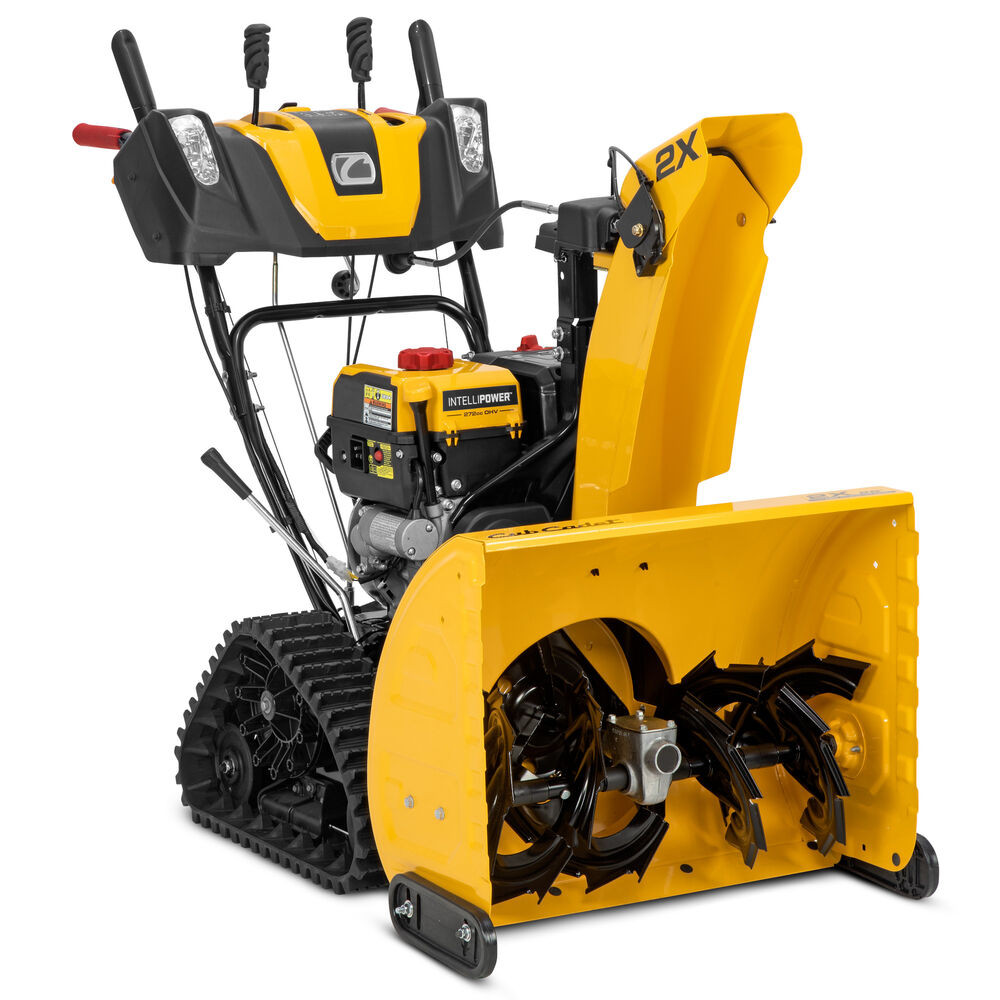
Cub Cadet Walk-Behind Snow Blowers
For home driveways and walkways: compare the two-stage and three-stage models listed at OUTDOORICA. Think about clearing width, maneuverability, driveway surface, storage space, and the features included on the specific machine.
Bring your driveway details: paved or gravel, narrow access points, typical drifts, and the snow ridge left near the road. Bigger is not automatically better when you still need to steer it and store it.
Shop Cub Cadet Snow Blowers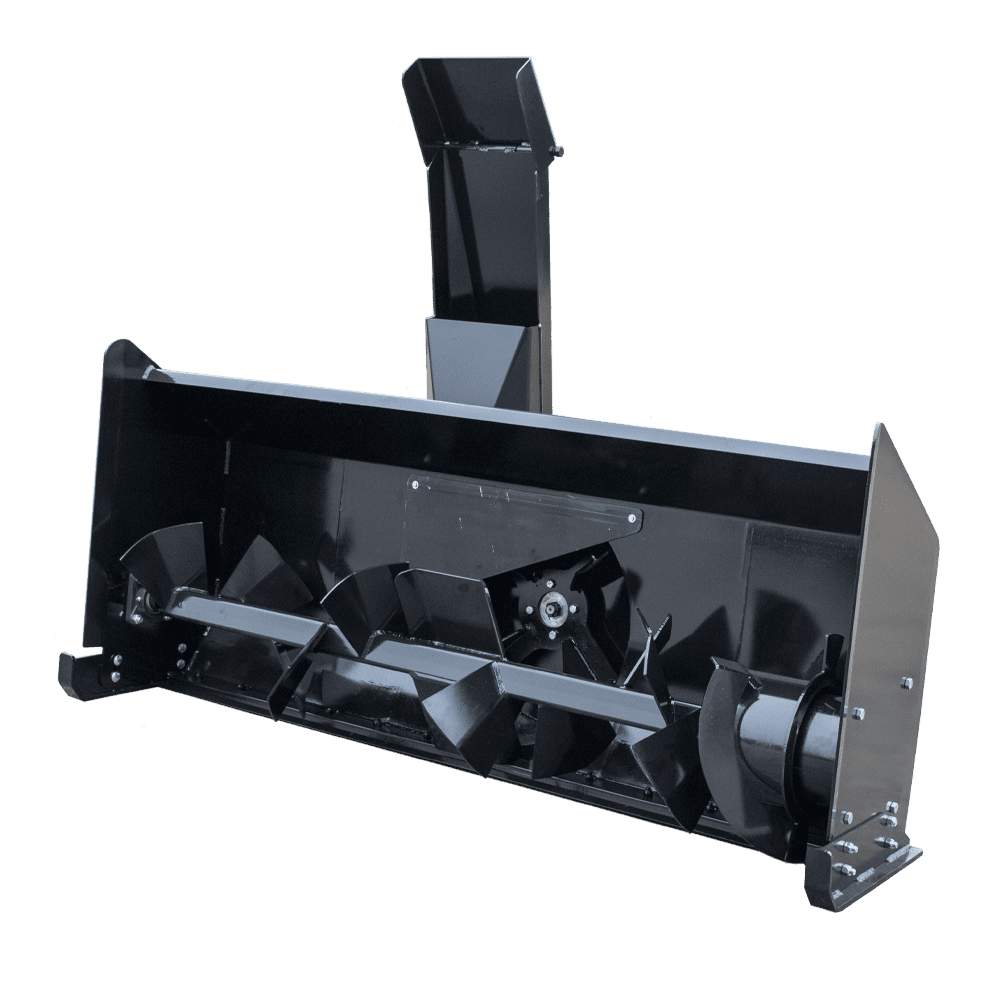
Prime Skid Steer Snow Blowers
For moving snow away from the working area: a blower can be useful where repeatedly pushing snow into roadside banks or nearby piles is not the best fit. Plan a safe discharge area before choosing one.
Confirm first: carrier model, hydraulic flow and pressure, electrical controls, attachment weight, and working width. Matching the blower to the carrier is part of the purchase—not an afterthought.
Shop Prime Skid Steer Snow Blowers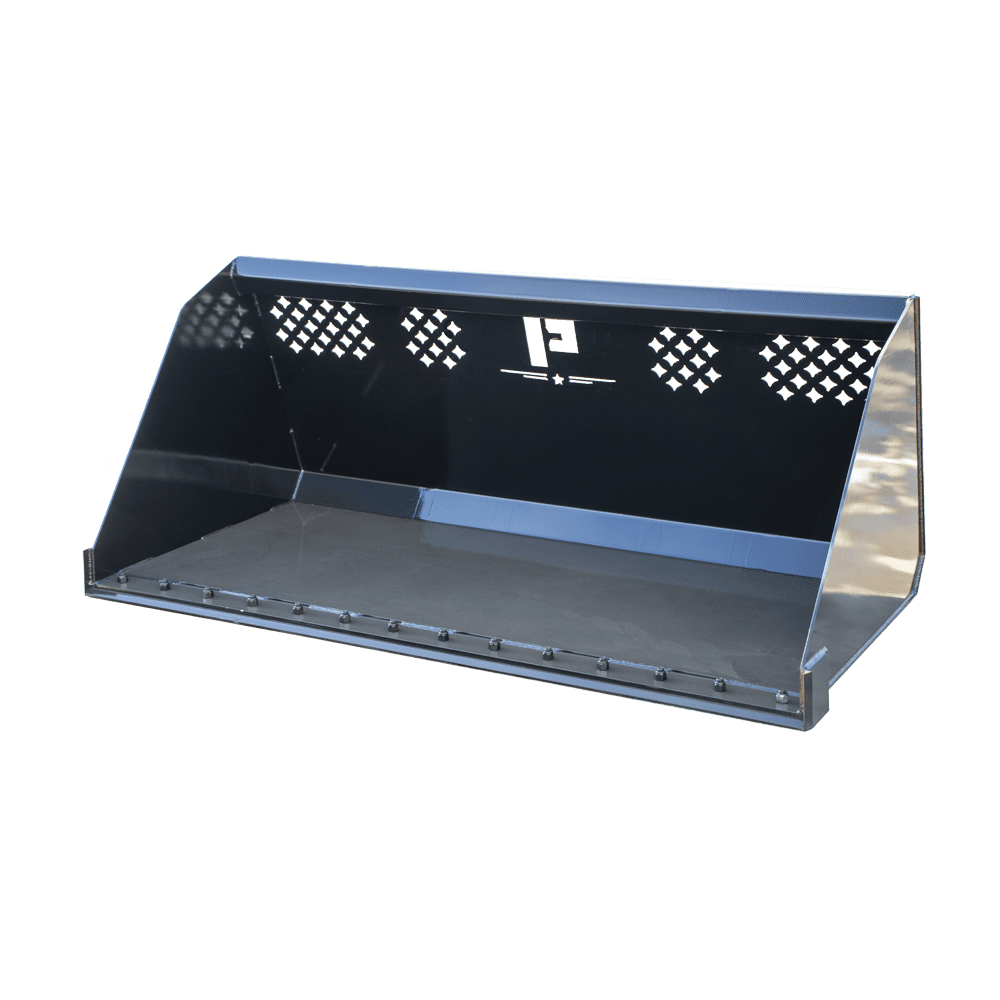
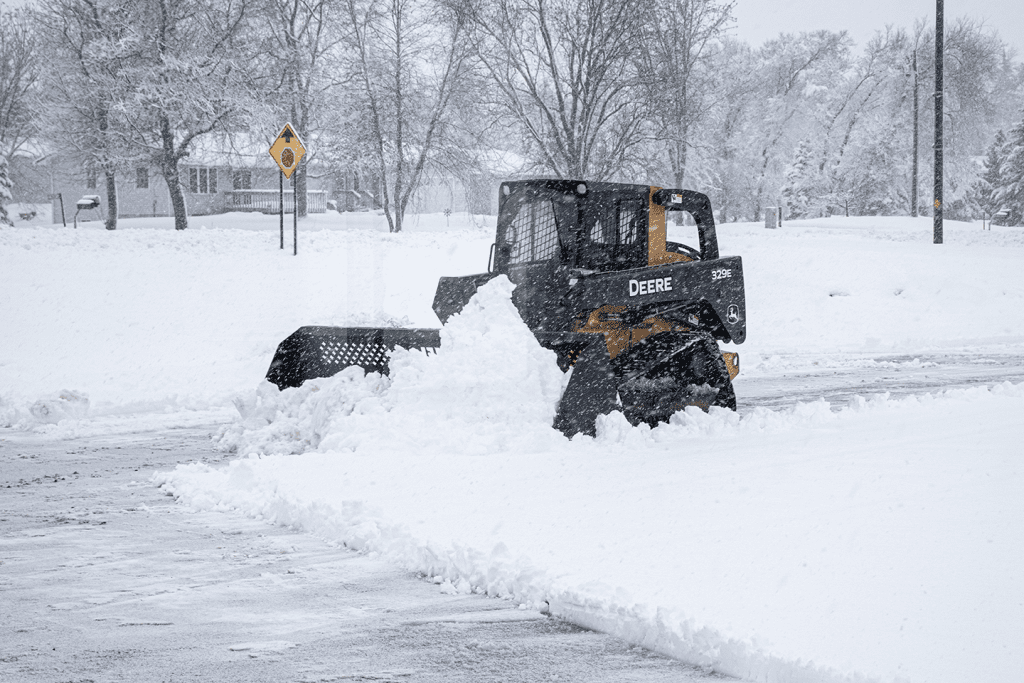
Prime Skid Steer Snow Buckets
For scooping, relocating, and stacking snow: a snow bucket offers carrying capacity when snow needs to be picked up and moved rather than simply pushed along.
Maintenance focus: cutting-edge wear, mounting components, and structural damage. Check the total load against your carrier’s capacity; a large bucket is not permission to overload the machine.
Shop Prime Snow Buckets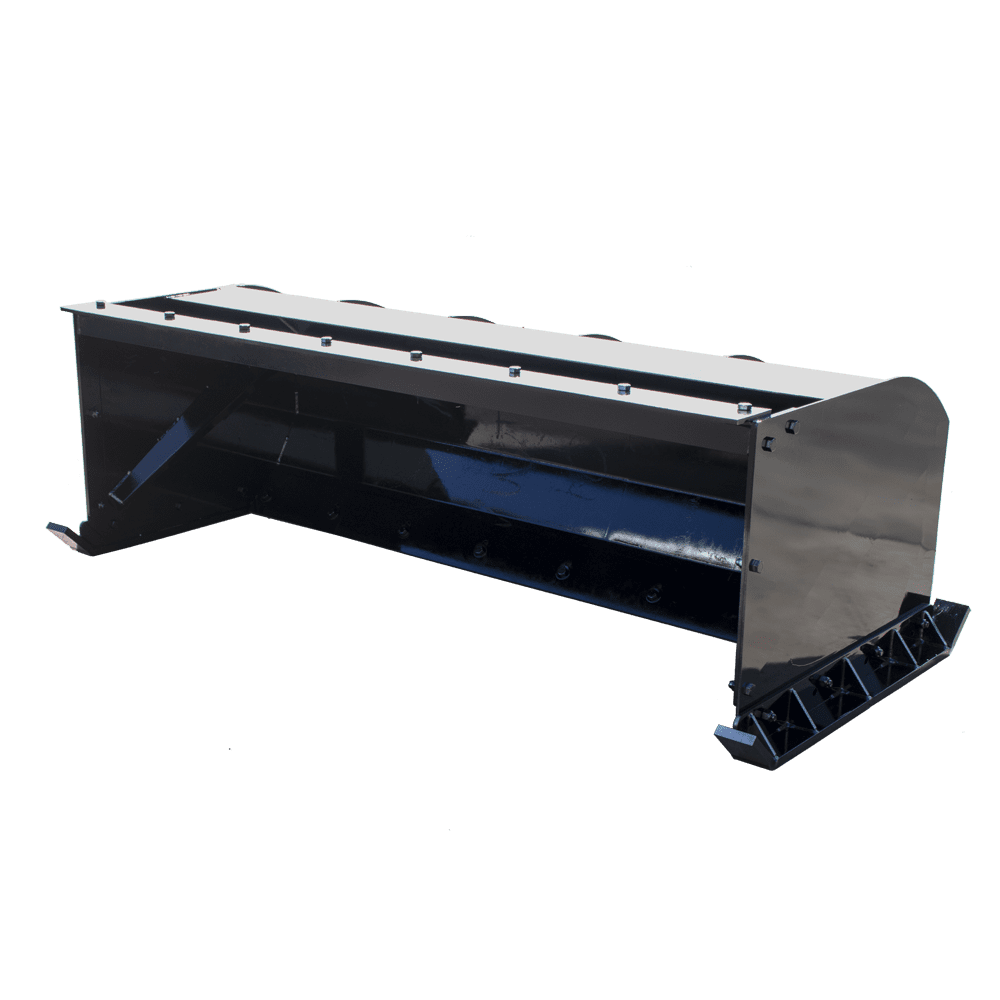
Prime Skid Steer Snow Pushers
For clearing open areas into designated snow-storage zones: a pusher can suit parking lots, wide driveways, and repeated passes where there is room to accumulate snow.
Maintenance focus: the cutting edge, wear shoes, and mounting hardware. Confirm whether an available back-drag option would help around your buildings; a pusher is not a substitute for a bucket when snow must be carried or loaded.
Shop Prime Snow Pushers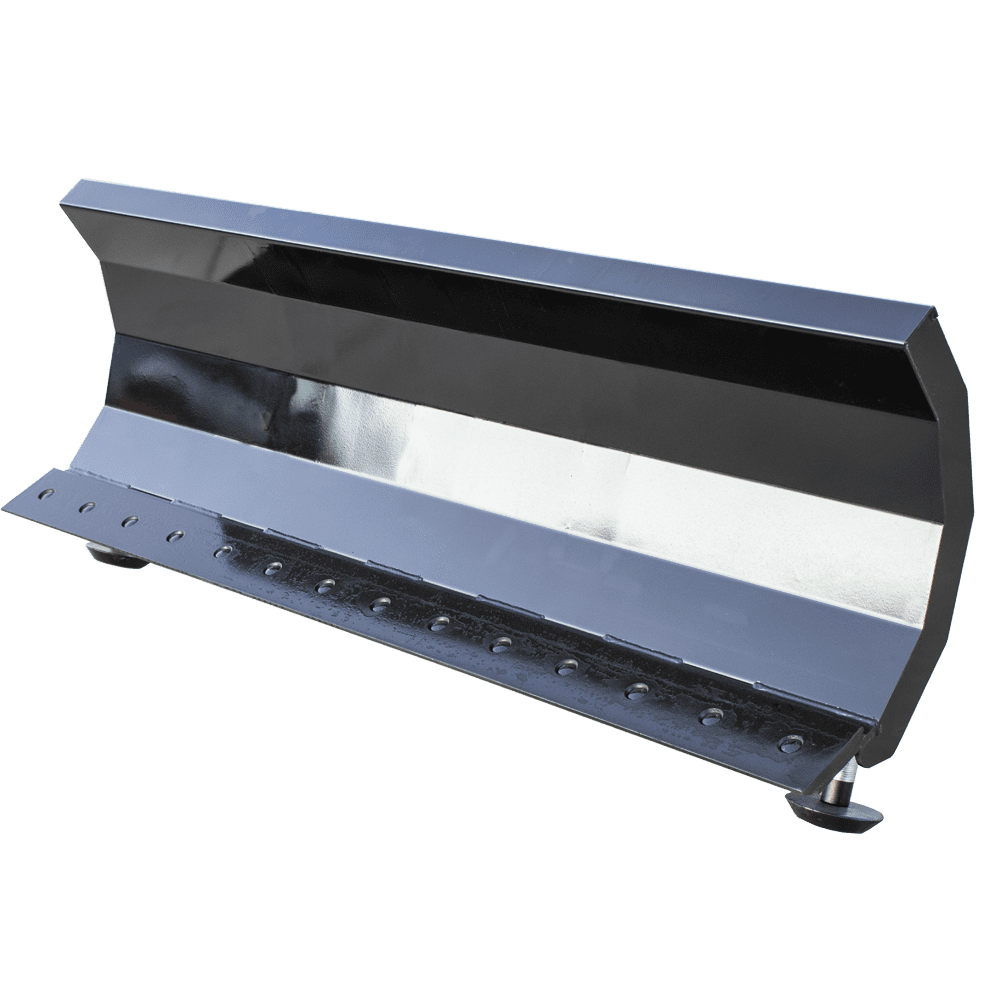
Prime Skid Steer Snow Blades
For directing snow to the side: an angle blade suits routes where you can windrow snow along an appropriate edge rather than carry it or throw it.
Maintenance focus: the edge, skid shoes, hydraulic hoses, pivot points, and trip components. Follow the model’s service procedure; do not improvise adjustments to spring-loaded mechanisms.
Shop Prime Snow BladesSource guidance: Cub Cadet selection guide ; Prime snow-attachment comparison ; snow bucket ; snow pusher ; snow blade .
Photos show examples. Confirm the exact model, included features, compatibility, and current availability on the linked product pages before ordering.
Snow Blower Repair & Pre-Season Service in Albany, MN
OUTDOORICA offers snow blower repair and service in Albany, Minnesota. Whether you need a pre-season tune-up or help with a machine that will not start, contact our team to discuss the equipment and the work needed.
For St. Cloud, Albany, Avon, St. Joseph, Sauk Centre, and surrounding Central Minnesota owners, start the conversation before snow removal becomes urgent. Ask about current scheduling and service availability for your brand and model.
Have these details ready: brand, model, serial number, symptoms, and when it last ran properly. For a skid steer attachment concern, include the carrier and attachment information so our team can confirm the appropriate service scope.
A worn belt does not automatically mean you need a new snow blower. Compare repair needs, overall condition, parts availability, and whether the equipment still fits your property before deciding to replace it.
Own a Toro snow blower? Contact us with the model, serial number, and work needed so our team can confirm service options before you bring it in. Do not assume every brand, model, or warranty repair is covered by the same service arrangement.
Request Snow Blower Repair or ServiceOr call 320-281-0424 .
OUTDOORICA • 209 County Road 156, Albany, MN 56307
Snow Blower Maintenance Questions
Why is my snow blower scraping the driveway or leaving snow behind?
Worn or incorrectly set skid shoes, scraper components, or paddles are possible causes, but surface conditions and other faults can contribute. Shut down and isolate the machine, then inspect against its manual. Review the wear-parts checklist rather than lowering the intake blindly.
Why won’t my snow blower start after sitting all summer?
Old fuel is one possibility, not a diagnosis. Check the manual’s starting sequence, fuel supply, key, and controls; choke and primer requirements vary. A fouled plug or fuel-system problem may need service. Stop repeated attempts if you smell leaking fuel or see damage. Cub Cadet’s pre-season guide explains the basic checks.
The engine runs, but it will not throw snow. What should I check?
Shut down and isolate power first. A blockage, failed shear pin on an applicable model, or drive problem can interrupt clearing. Hydraulic attachments need a different diagnosis. Never reach into the intake or chute, and do not bypass protective components. Ask OUTDOORICA about service when the cause is unclear.
Does every snow blower have an air filter to replace?
No. Some dedicated snow engines are designed without a serviceable air filter; for example, Briggs & Stratton lists none on its 950 Snow Series engine . Check your engine manual before buying a generic tune-up kit. Do not remove a filter from an engine designed to use one.
How much does a snow blower tune-up or repair cost?
The answer depends on the model, its condition, the diagnosis, and the parts and labor required. Contact OUTDOORICA with your equipment details for current service information rather than relying on a generic online tune-up price.
What is included in a snow blower tune-up?
Scope varies by machine and service package. Ask what inspection, fluids, ignition checks, adjustments, replacement parts, and testing are included, and which repairs need separate approval. OUTDOORICA can explain the proposed work after reviewing your equipment details.
Make October Your Preparation Month
Use October 15–21 as the reminder. Inspect what you own, repair what needs attention, and choose upgrades around the work you actually do.
When the driveway turns white, the goal is simple: start the machine, clear the snow, and get back inside—not begin a repair project in your winter gloves.
Request OUTDOORICA service or compare Cub Cadet snow blowers before the season puts your equipment to the test.
This guide covers general preparation and inspection, not every model’s repair procedure. The operator, engine, attachment, and carrier manuals govern specific maintenance requirements. Stop and obtain qualified help whenever damage, stored energy, or a procedure is beyond your training.